A Winter Solstice Reflection
What Does It Take To Embody ‘A Holiday Spirit’?

In the Northern Hemisphere, we have arrived at winter’s solstice point – the darkest day of the year. It marks the shortest day and longest night of the year, a time when the sun is at its lowest point in the sky. A solstice is when ‘the sun stands still’. Darkness dominates the landscape most fully at this time.
It is during these times that we look towards celebrations that bring together as people, to move us out of hibernation and isolation, and to turn towards the gradual ‘coming of the light’, and the ‘coming of new life.’
We arrive at the time of year where our oldest and deepest traditions shape our days, and shape our spirits. We adhere to the expectations of our cultural and family rituals, we embrace our valued and inherited ways of creating feasts.
We also approach these same holidays with tension and apprehension, and particular trepidations. Much begins to feel at stake. We want our holidays to go well; we fear the holidays going wrong.
We all need to be ‘lifted up out of the darkness’ of winter’s dormancy, and we look forward to re-enacting the rituals and gatherings that are rich with sentimental feeling and memories of times past.
We also have certain expectations for ourselves and for others that matter to us. These expectations can tilt us towards old and painful feelings of obligation, disappointment or disillusionment. In addition, we will inevitably bear the sorrows borne from the ache of missing of loved ones no longer with us. We carry within us a yearning for what was once cherished, and now can no longer be.
With the solstice now here, and the winter holiday season in effect, we wait for, and look to get ourselves into, ‘the spirit of the holiday season’.

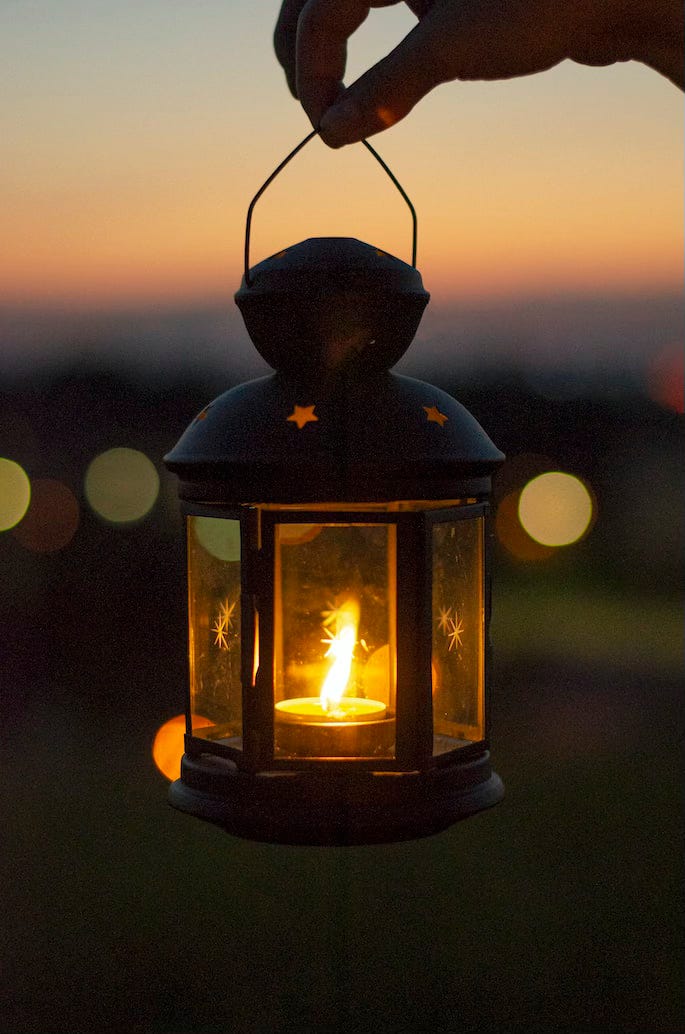
Photo by Raimond Klavins on Unsplash
We need sunlight to live. The burning light of the sun is the source of energy for all of life on earth. Our spirits are uplifted and renewed by a glorious, blue sky, sunny day.
On this solstice day, we have the least amount of warmth and light available to us. Thus the need for one another, and for rituals of renewal, to restore us and refill us.
Feasts and festivals help to refresh and uplift us from the daily hardships of living. They bring us closer towards the gods we worship and the traditions we place our faith in.
We especially long for this closer relationship to the light in the heart of winter’s darkened time, when so much of life goes underground, and a dormant quiet rules the cold, barren landscape of the season.
This year, we can reflect on what it takes to embody the ‘spirit of the holidays’. Let’s begin by considering the question below.
“What does a holiday spirit ask (or require) of us?”
What is opportunities await us at this end of year time?
How might we begin to think of our participation in an atmosphere of holiness or wholeness, a larger space that transcends the requirements of our day-to-day living?
Let’s explore what the point of holy days, holidays, feasts, festivals, is meant to be about. Do your best to look beyond any particular religious or secular framework, to look beyond what any particular cultural norm or institutional framework depicts.
I’d like to take up some passages from a chapter in a collection of Joseph Campbell essays in the book The Mythic Dimension, edited by Antony an Couvering.
In our tradition of ‘living into the Hero’s Journey® myth’, do what you can to separate yourself out from your usual mode of being. Take a few breaths and a few minutes, and walk with me through a deeper reconsideration for your own personal participation in a winter holiday or holy day that you might choose to embrace more fully.
We’ll do this together, creating a space for reflection and new meaning making, centered on passages from the Campbell essay mentioned above.
Here we go.
“The spirit of the festival, the holiday, the holy day of the religious ceremonial, requires that the normal attitude toward the cares of the world should have been temporarily set aside in favor of a particular mood of dressing up. The world is (to be) hung with banners.”
Any participation in something greater than ourselves requires something of ourselves.
I realize this is a very different orientation than what a holiday is to do for us, or give to us. Campbell is said to have made the following reference often:
“We have but to take one step towards the gods, and then they will take ten steps towards us.”
Consider that it is we who have to initiate a reciprocal kind of engagement with transformative forces. We go first. We make an offering. We make a petition to the gods with the whole-hearted sincerity of our full being. By taking this action, something moves.
Secondly, the winter season is about waiting. This is not the anxious kind of waiting that ungrounds us from the present moment, causing us to ‘fall face forward’ from the unbalanced and heavy weight of fearful wishes or unrealistic demands.
This way of waiting is an ‘advent’ experience, which is fundamentally about preparing to be more fully present for something about to happen. It is about becoming available as a witness to something transformative that is about to arrive. It provides a sense of confident expectation, fostered by a faith in the process of living.
In the Christian tradition of Advent, preparations are about ‘being made ready’ to receive the divine, for the tenderness of ‘coming into being’ to be among us.
This ties us into the mythic framework of being on a worthy adventure. An adventure involves a movement towards an encounter with something greater than ourselves. In a heroic or faith-filled adventure, we take a step forward into something previously unknown, something never before experienced or thought about, and as we do, the unknown simultaneously and mysteriously approaches us.
The adventure itself awaits, and it arrives to meet our willingness to enter into it.
Any renewing or newly uplifting encounter, any experience of a holiday atmosphere, “requires that the normal attitude toward the cares of the world should have been temporarily set aside in favor of a particular mood of dressing up.”
A ‘holiday spirit’ requires us to separate ourselves out from the usual. It beckons us to enter an ‘initiatory’ state of being, a particular kind of attitude or mood, whereby we expect to ‘go out beyond’, anticipate ‘being taken’, or hope to be ‘lifted up’.
This is why we ‘dress up’. It is not something we do just to be noticed for our fashion statement – but to recognized as something or someone ‘coming into being’, and going beyond our typical ways of identifying who we are.
This is also why we hang banners on our doors and windows, as thresholds to mark a special time or sacred space. Banners serve as heralds or proclamations of something becoming more important now, a sign of that is it time to go beyond the usual.
A banner also demonstrates a particular intent and declares a definitive purpose, showing and well as telling ‘this moment matters.’

Photo by Thomas Kinto on Unsplash
“For the whole purpose of entering a sanctuary or participating in a festival is that one should be over-taken by the state known as ‘the other mind’ where one is ‘beside oneself’, spellbound – set apart from one’s logic of self-possession and overpowered by (another) force…”
The French poet Paul Eluard has a made a statement that speaks to the heart of the hero’s journey® myth; “There is another world, but it is in this one.”
Living into our own personal myth is not at all about retreating into a ‘fantastical’ world. It is a kind of living that declares a ‘yes’ to life - which opens the threshold door to perceiving the extraordinary dimensions of an unfolding mystery already present in ordinary experience - but only if we can open ourselves to that sense of apprehension.
Crossing the threshold into sacred space, entering into a sense of mystery and awe - this begins to take effect whenever we are fully immersed, in body and mind, in the very experience of living. Setting aside our usual routines is what makes this possible. Then we can open to something beyond and outside of what we usually think and do, and therefore, can no longer ‘sense’.
By entering into the activities of the feast, by participating wholeheartedly in the festival scene, all of our senses become activated and thus heightened, and we can be moved, we can go beyond our self-possession. We ‘partake’ in that something which is greater than ourselves, beyond all knowing, and we are taken.
We can have these experiences when we place ourselves outdoors in the natural world, or indoors such as cathedrals or art galleries, where are senses can apprehend ‘a greater presence near to us’. In a seasonal time like now, we can have an experience of transcendence, as our cultures support us in setting aside our routines, and ask us to ‘play the game of the gods’, as Campbell would say.
This playing the game of the gods, by the way, is not being arrogant or prideful. Quite to the contrary. It is about a embracing a ‘spirit’, going beyond the concreteness of things that requires a kind of humility, a childlike state of wonder, an ebullience that lifts us up.
In every heightened setting and holy (wholeness-making) moment, what is being asked of us, or required of us, is our full participation. Being ‘all in’. Giving ourselves over to the freshness, the reverence, and wonder of the experience. Being absorbed in the moment, identified with that which envelops us, is greater than us, and beyond our ability to understand.
“In the playing the game of the gods we take a step toward that reality, which is ultimately the reality of ourselves. Hence the rapture, the feelings of delight, and the sense of refreshment, harmony and re-creation!”
Complexity, Paradox & Yielding
Human beings live in a ‘dialectical tension’ with one another – and we live with the same dynamic, living tension with various aspects of our own humanity as well.
A dialectical tension holds things together in complex and paradoxical ways that ‘enhance, preserve, and negate’ each other, all at once.
A ‘spirit of the holiday’ results when we can live in harmony and balance with one another, and within ourselves. As we set aside time for feasts and festivals, and as we honor the ‘coming of the newborn light’ out of the season’s darkness, we can experience the same coming from within ourselves.
Ceremonies and celebrations mark such occasions, holy moments in time, when we step out of the norms, beyond divisions among us and within us. We yield to something greater than our separate sense of self. We let go of our ‘usual’ selves, only to arrive at ourselves in more whole and refreshed ways of being and becoming.
In this way, we are lifted up by letting go, captured by the wonder and innocence of something newborn in us and for us.
We celebrate a peace coming to earth, if only for the moment from the collective goodness and goodwill of people and of divine grace, gathered among us.
I wish you the heavenly peace of becoming ever more present on the earth, in this winter solstice time. May you stand in the grounding stillness of being alive in the now point, in joyful anticipation, awaiting the light that is seeking its expression through you.
Michael